Autonomous Drones for Emergency Services
The integration of autonomous drones into emergency services has ushered in a new era of efficiency, safety, and innovation. These drones are not just tools; they are game-changers, enhancing the ability of emergency services to respond faster, gather critical intelligence, and ensure public safety.
Since 2024, IDroneInnovations (IDI) has been at the forefront of this transformation, developing advanced automated drone deployment systems for emergency services across the UK. This case study highlights how IDI's collaboration with the National Police Chiefs' Council (NPCC) and emergency services has shaped the future of autonomous operations.
From Concept to Reality: The Autonomous Operations Program
March 2024: Initial Development
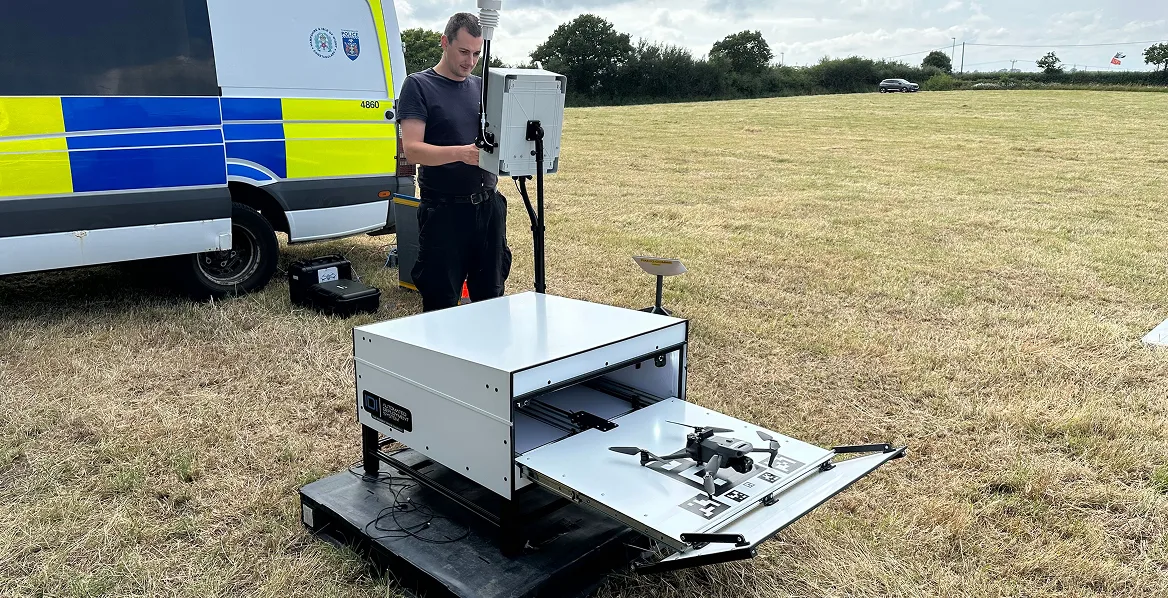
- Challenge: Emergency services needed an automated drone solution to operate from IDI Docking Stations.
- Solution: IDI developed drone automation software in just three months, working closely with emergency services to meet their specific needs.
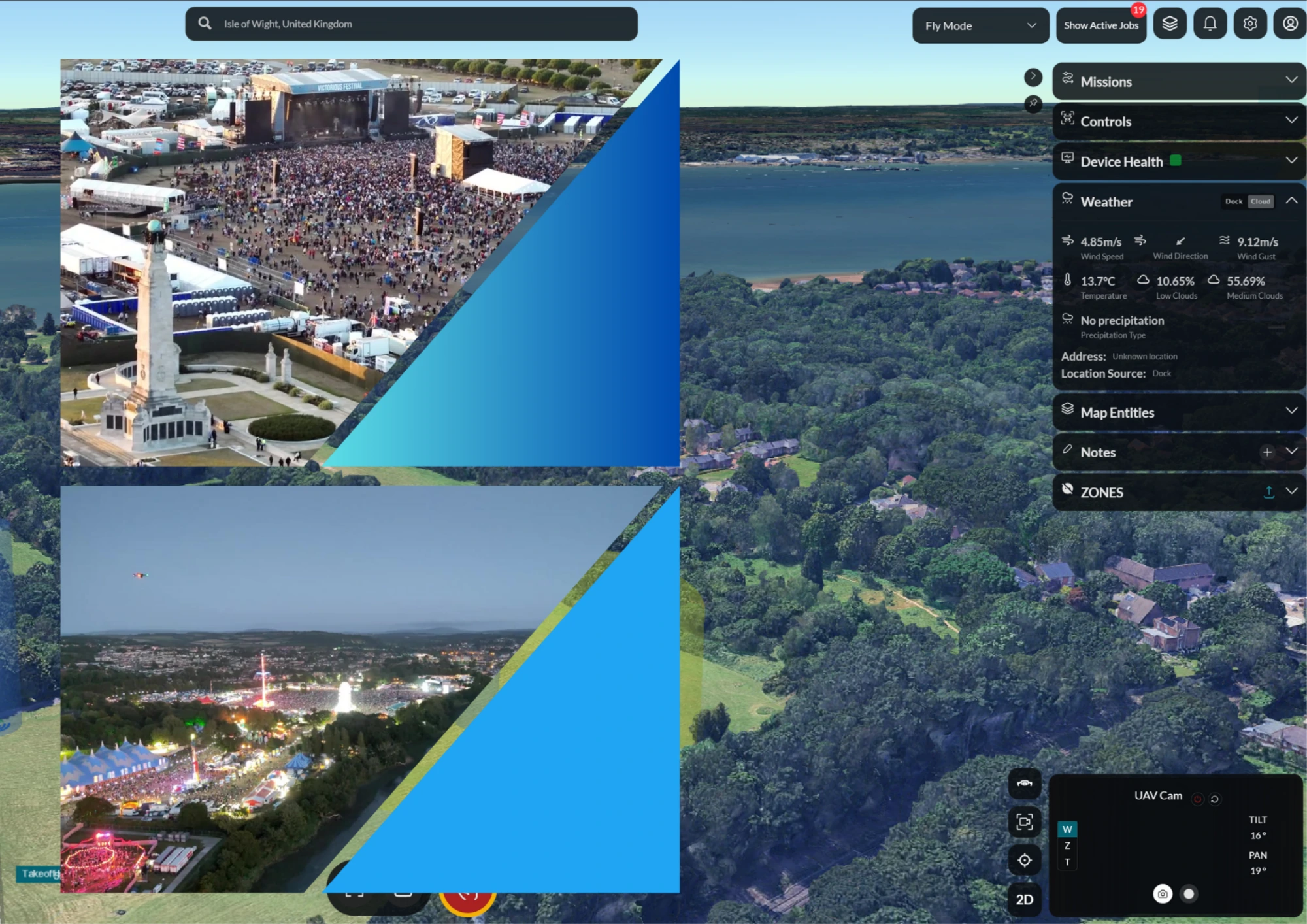
June 2024: Isle of Wight Festival Trial
- Objective: Test autonomous drones in a high-traffic airspace with manned aircraft.
- Outcome: Successful operation in collaboration with temporary heliport operators, showcasing the system's reliability and safety.
August 2024: Victorious Festival Trial
- Objective: Evaluate performance in complex conditions.
- Outcome: The trial proved the robustness of IDI's hardware and software, even in dynamic environments.
October 2024: Southampton Deployments
- Advancements: Larger, off-grid Automated Drone Deployment Systems (ADDS) were integrated, enabling longer BVLOS (Beyond Visual Line of Sight) operations.
2025: Advanced Features for Safer Operations
Safety First: Enhanced Features
- Geofencing: Prevents drones from entering restricted areas.
- Safe Landing Locations: Identifies secure zones for emergency landings.
- Safe Muster Points: Facilitates operational coordination during emergencies.
Cutting-Edge Integrations
- Volant Ground Mitigation Software: Enhances situational awareness.
- Drone Defence Detection Software: Provides real-time alerts for safer operations.
These developments have significantly improved the capabilities of drones in emergency services, ensuring safer and more efficient BVLOS operations.
Why Autonomous Drones Are Essential in Modern Emergency Services
- Rapid Response: Drones can reach emergency scenes faster than traditional methods, providing critical intelligence before response units arrive.
- Cost Efficiency: UAVs reduce reliance on expensive resources like helicopters while providing superior coverage.
- Enhanced Safety: Drones can access hazardous areas without putting personnel at risk.
- Data Precision: UAVs provide high-resolution imagery and real-time data for informed decision-making.
- 24/7 Operations: Continuous coverage day and night, regardless of weather conditions.
Key Operational Benefits
Rapid Response Capability
IDI drones deploy in under 20 seconds and autonomously reach incidents within 90 seconds, managing multiple simultaneous incidents when required. IDI Pathfinder ensures every flight follows the optimal route, giving your team a critical operational advantage when every second counts.
Complete Situational Awareness
From building interiors to city streets, IDI provides continuous live video feeds to response teams and control room staff. Everyone shares the same real-time perspective, enabling safer, more coordinated decision-making across your organisation.
Time and Distance Advantage
When drones arrive ahead of response units, every incident begins with enhanced time and distance. High-risk situations are prevented. Unknown entries become intelligence-led entries. Continuous visibility operates day and night, keeping teams informed, protected, and in command.
Deployment Models
Response Vehicle Deployment
With IDI drones carried in response vehicles, teams deploy directly from the scene to gain aerial or indoor visibility. This approach suits services without dedicated remote pilots or control room capabilities, as well as rural areas, providing teams with the intelligence needed to create time and distance for safer incident management.
Response Team Initiated Operations
A response team member activates an IDI drone at the scene, then a remote pilot assumes control via IDI Fly over 5G/LTE networks. This keeps teams focused on the incident while delivering real-time situational awareness indoors or outdoors.
Dock-Based Operations
Dock stations strategically positioned across your service area keep IDI drones charged and ready 24/7. Integrated with your CAD system, a remote pilot launches immediately when an incident is reported, providing situational awareness before response units arrive. Operators can manage multiple simultaneous incidents, delivering the fastest response and continuous coverage in high-demand areas.
The Bigger Picture: Collaboration and Innovation
The success of IDI's collaboration with emergency services highlights the importance of:
- Interoperability: Seamless integration with existing systems.
- Public Sector Partnerships: Close collaboration ensures solutions meet real-world needs.
- Rapid Development: Agile processes enable quick adaptation to evolving challenges.
- Regulatory Compliance: Expert guidance through CAA requirements for autonomous operations.
The Future of Autonomous Drones in Emergency Services
As autonomous drones continue to evolve, the focus remains on unlocking their full potential while ensuring safety and compliance with regulations. IDI's commitment to innovation, safety, and collaboration positions them as leaders in this transformative field.
Conclusion: A New Era of Emergency Response
Autonomous drones are not just tools for emergency services; they are redefining the way emergency response operates. From rapid response to enhanced safety, drones in emergency services are proving their worth every day. With pioneers like IDI leading the charge, the future of autonomous operations in emergency services looks brighter than ever.