The hardest part of getting a DFR programme approved is rarely the technology. It is the business case. Decision makers want to know what it costs, what it returns, and when it pays for itself. This guide sets out a fair way to work that out, without the inflated numbers that make a case fall apart under scrutiny.
If you would rather start with numbers for your own situation, our ROI calculator lets you model it directly. The sections below explain what sits behind it.
Why DFR ROI is easy to get wrong
DFR returns show up in two forms: hard savings you can put a number against, and operational value that is real but harder to price. A weak business case either ignores the second kind or wildly overstates it. A strong one separates the two and is honest about which is which.
The cost side
Account for the full programme, not just the hardware:
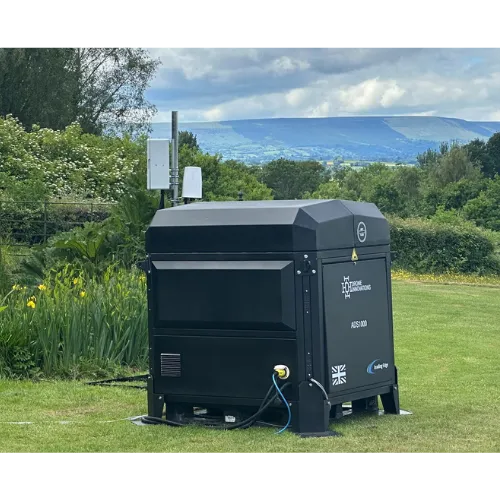
- Docking stations and drones, including spares and replacement cycles.
- Software and connectivity, usually an ongoing subscription and data cost.
- Regulatory work, including the safety case for Beyond Visual Line of Sight flight and the time it takes.
- People, covering operator training, certification and the staffing of the control room.
- Sites, including installation, power and any network upgrades.
- Support and maintenance over the life of the programme.
The benefit side
Some benefits convert to money fairly directly:
- Resource efficiency. A drone overhead can confirm whether an incident needs a full response, which reduces unnecessary deployments and frees officers for other work.
- Reduced reliance on costly assets. For some tasks a drone covers ground that would otherwise need a helicopter or a larger team.
- Faster resolution. Quicker, better informed decisions can shorten how long an incident ties up resources.
Others are real but should be argued, not priced precisely:
- Response time. A drone on scene in a couple of minutes changes what responders know before they arrive.
- Officer and public safety. Better situational awareness before officers commit to a scene.
- Evidence quality. An aerial record of a scene that would otherwise be lost.
A simple framework
Work it out in four steps:
- Add up the total programme cost over a realistic period, three to five years.
- Estimate the hard savings over the same period, conservatively.
- Set out the operational benefits separately, in plain terms, without forcing a number onto them.
- Compare the hard savings against the cost to get a payback view, then present the operational benefits as the case for everything the numbers do not capture.
This structure survives scrutiny because it does not pretend the soft benefits are cash. It lets the hard numbers carry the financial argument and the operational benefits carry the public safety argument.
What to be careful about
Avoid headline savings that assume the drone replaces whole teams or aircraft outright. It rarely does, and an overstated claim undermines the rest of your case. A conservative number that holds up is worth more than an ambitious one that does not.
For the wider picture of building and running a programme, see our guide on how to start a DFR programme in the UK.
FAQs
How long until a DFR programme pays back?
It depends on scale, call volume and how you account for benefits. Model it over three to five years rather than expecting a quick return, and keep the hard savings conservative.
Should officer safety be in the financial case?
Present it as an operational benefit, not a cash figure. It is one of the strongest arguments for DFR, but pricing it precisely tends to weaken rather than strengthen the case.
Does DFR replace a helicopter?
For some tasks it reduces the need, but it is not a like for like replacement. Claim the offset only where it genuinely applies.