Body
The Met Police has set out plans for drones across every London borough and a city-wide emergency services drone network. Whatever your view on the wider technology announcement, the drone piece carries a clear signal: Drone as First Responder is moving from trials to everyday infrastructure in UK policing. Here is what was announced, why it matters, and where IDI fits.
What the Met announced
In June 2026 the Met set out an ambition to have drone coverage in every London borough within a year. It builds on a programme that today runs from three drone sites with nine aircraft, deploying to around 200 incidents a week with response times averaging under two minutes. The plan is to work with the blue light services to build a city-wide emergency services drone network, with coordinated airspace management, shared launch sites, and shared connectivity and control systems. The announcement also covered live facial recognition and AI in investigations; this article focuses on the drone network.
Why this matters
For years, DFR in the UK has been described as promising but early. An ambition to cover every borough, framed as shared infrastructure across the blue light services, is a different statement. It treats a drone overhead in the first minutes of an incident not as an experiment but as a standard part of the response. That reframing matters for every force in the country, not just the Met, because it shifts the question from "should we trial DFR" to "how do we run it at scale, safely and affordably".
The hard part is the network, not the drone
A single drone over a single site is a solved problem. A city-wide network is a different order of difficulty. It means many aircraft across many sites, multiple services sharing the same airspace, and a common way to command, connect and record all of it. That is far less a hardware problem than a software and operating-model one: one console that can run the whole fleet, resilient connectivity at every dock, failsafes that hold when the network does not, and a clean evidential record from every flight. Get that layer right and the network scales. Get it wrong and you have a collection of drones that do not work as a system.
Where IDI fits
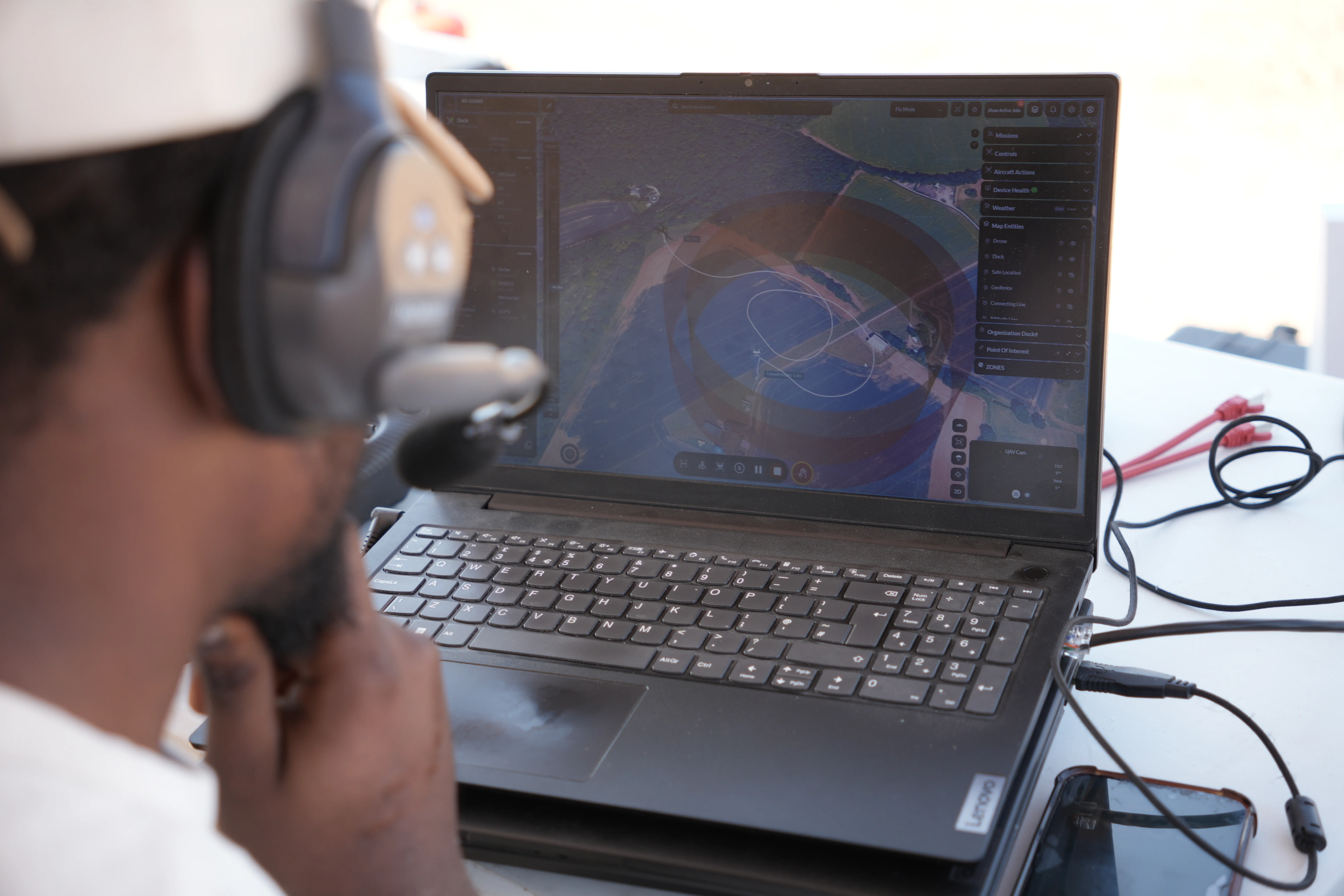
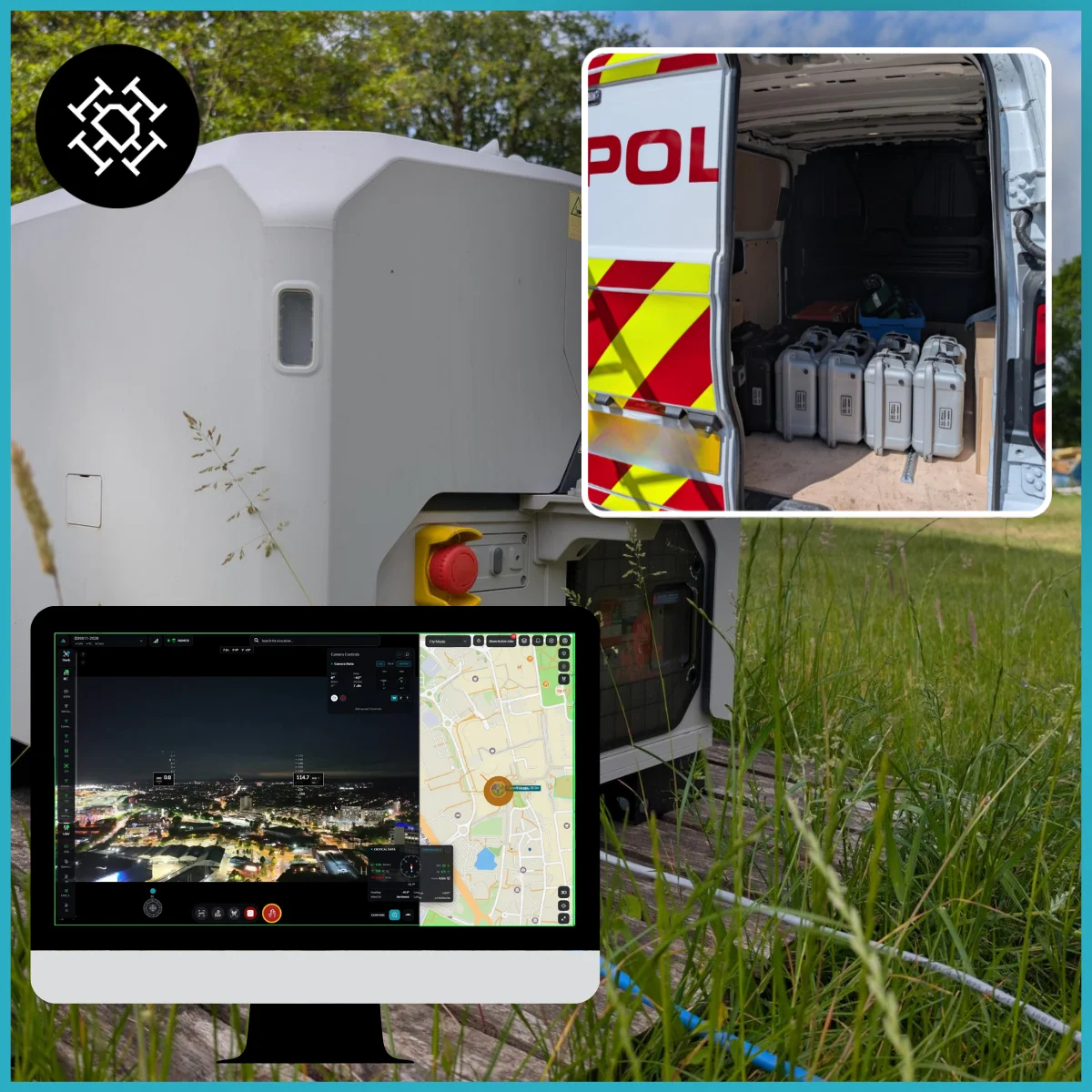
This is the layer IDI is built for. IDI FLY is a drone-agnostic operations platform that runs across the DJI Dock ecosystem and our own UK-built docks and aircraft, commanding the whole fleet from one browser. The IDI Companion Device hardens each dock for real operations with resilient 5G connectivity, local edge control and continuity through power events. And because we design and build end to end in the UK, forces get a single, accountable partner rather than a stack of vendors.
IDI FLY is already deployed with UK police forces, and we are expanding to further forces through this year. We have built the platform around exactly the things a network needs: one operator surface for many assets, a defensible evidential record by default, and an architecture ready for the move towards routine BVLOS. For an overview, see the DFR solution page and the IDI FLY platform.
If you are a force watching this
You do not need a city-scale programme to start. The forces that will scale cleanly are the ones that begin with a tightly scoped deployment, prove the model, and choose a platform and operating model built to grow.
FAQs
Is DFR only for large forces like the Met?
No. The same model works at any scale. Smaller forces often move faster because a tightly scoped first deployment is easier to approve and learn from.
Who uses IDI FLY today?
IDI FLY is already deployed with UK police forces, and we are expanding to further forces this year. It runs across the DJI Dock ecosystem and our UK-built docks and aircraft.
What does a city-wide network actually need?
Shared airspace coordination, resilient connectivity, a common command and control layer, and a defensible evidential record. It is mostly a software and operating-model challenge, not a hardware one.
How do we get started?
Define the outcomes you want, begin the BVLOS conversation early, and start with a bounded first deployment. Talk to us and we will help you build the case.
Link to BBC Article.